
DENOS Lab joins the Quan Health Data Analytics Summit in Banff
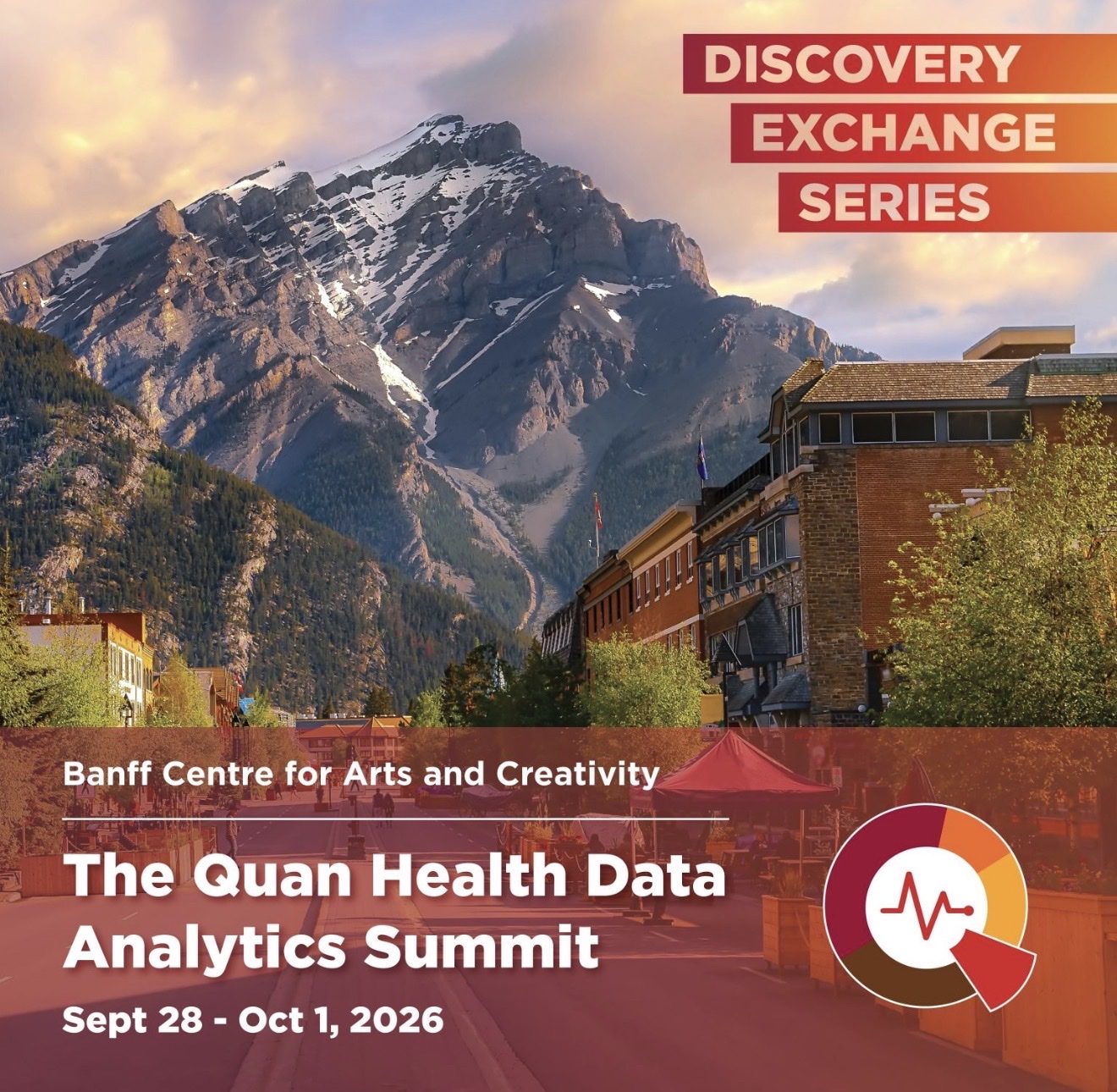
BANFF. Health data is only as good as the people who understand where it comes from. That idea ran through the Quan Health Data Analytics Summit, which brought health data researchers, clinicians, policy makers, and trainees to the Banff Centre for Arts and Creativity this week, and DENOS Lab director Dr. Steve Drew and PhD candidate Gerry Wu were in the room.
The 3.5 day summit is the third installment of the University of Calgary’s Discovery Exchange Series, co-hosted by the Office of the Vice-President (Research) and presented by the Centre for Health Informatics (CHI) at the Cumming School of Medicine. It honours Dr. Hude Quan, the epidemiologist who founded CHI and the university’s WHO Collaborating Centre for Classification, Terminologies, and Standards, and whose work shaped how health data is coded, validated, and used around the world. Quan died earlier this year. The program was developed by Dr. Jessalyn Holodinsky, Danielle Southern, and Dr. Tyler Williamson of CHI.
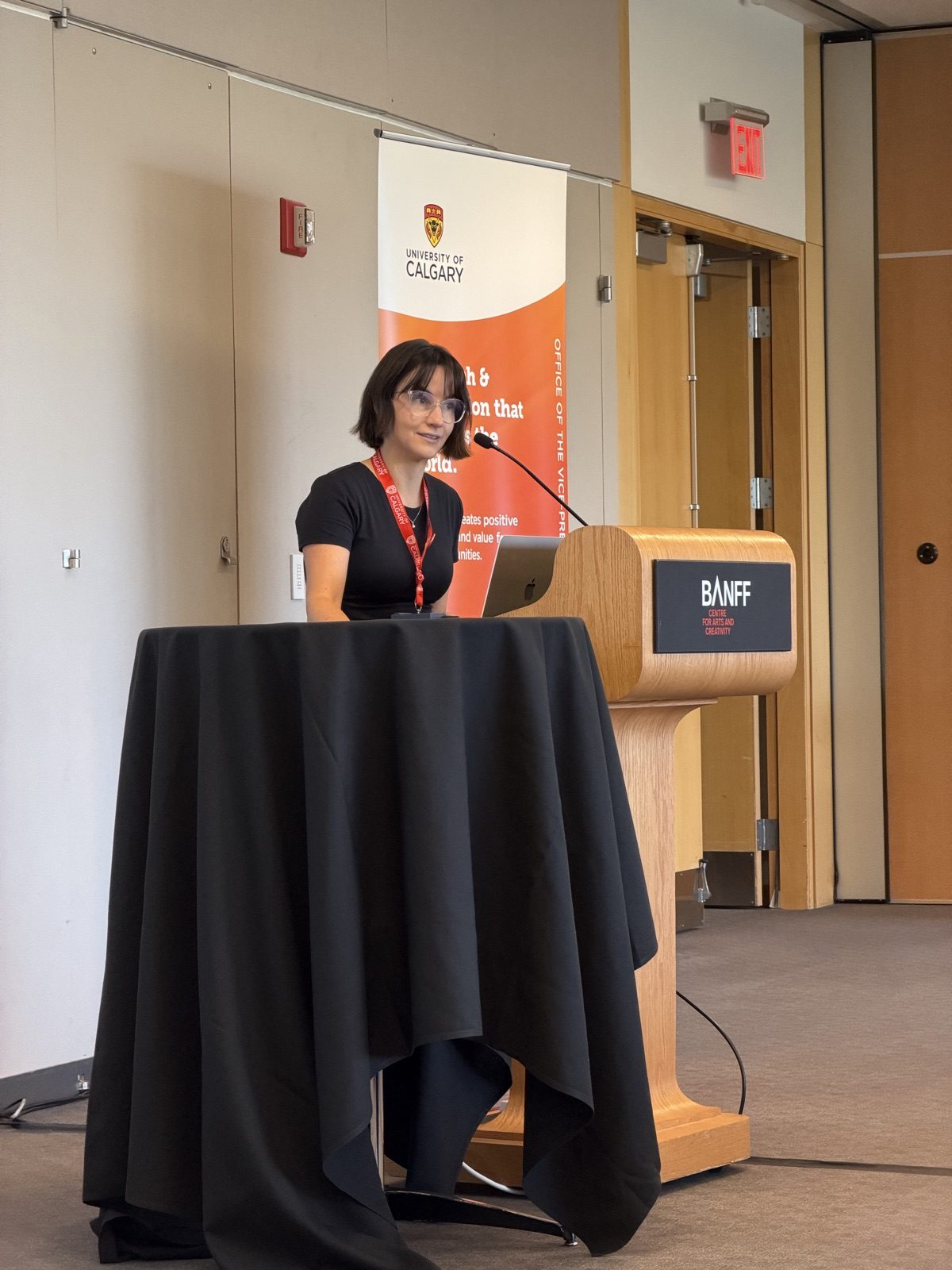
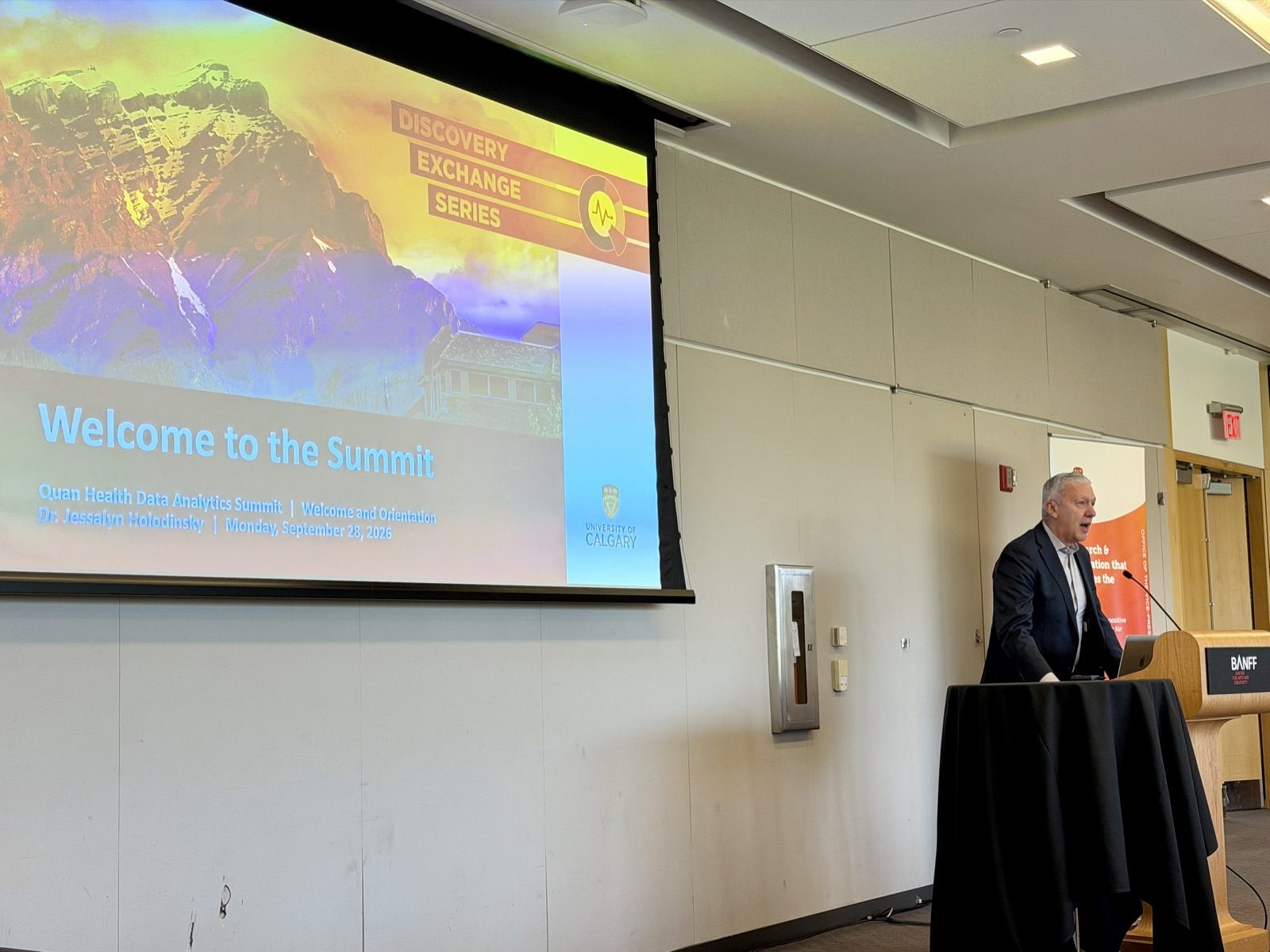
Monday was given to foundations under the motto “You cannot analyze what you do not understand.” After a land acknowledgment by Holodinsky and an opening blessing by Elder Tina Fox, the opening plenary with Dr. William Ghali, the university’s Vice-President (Research), and Holodinsky turned to Quan’s legacy. Sessions through the day walked through the architecture of health administrative data, data quality and validation, and how to define populations, exposures, and outcomes, before Dr. Pamela Roach led an invited lecture on Indigenous health data sovereignty and Dr. Jeff Bakal and Williamson closed the day with a fireside chat on ethics, privacy, and data governance.
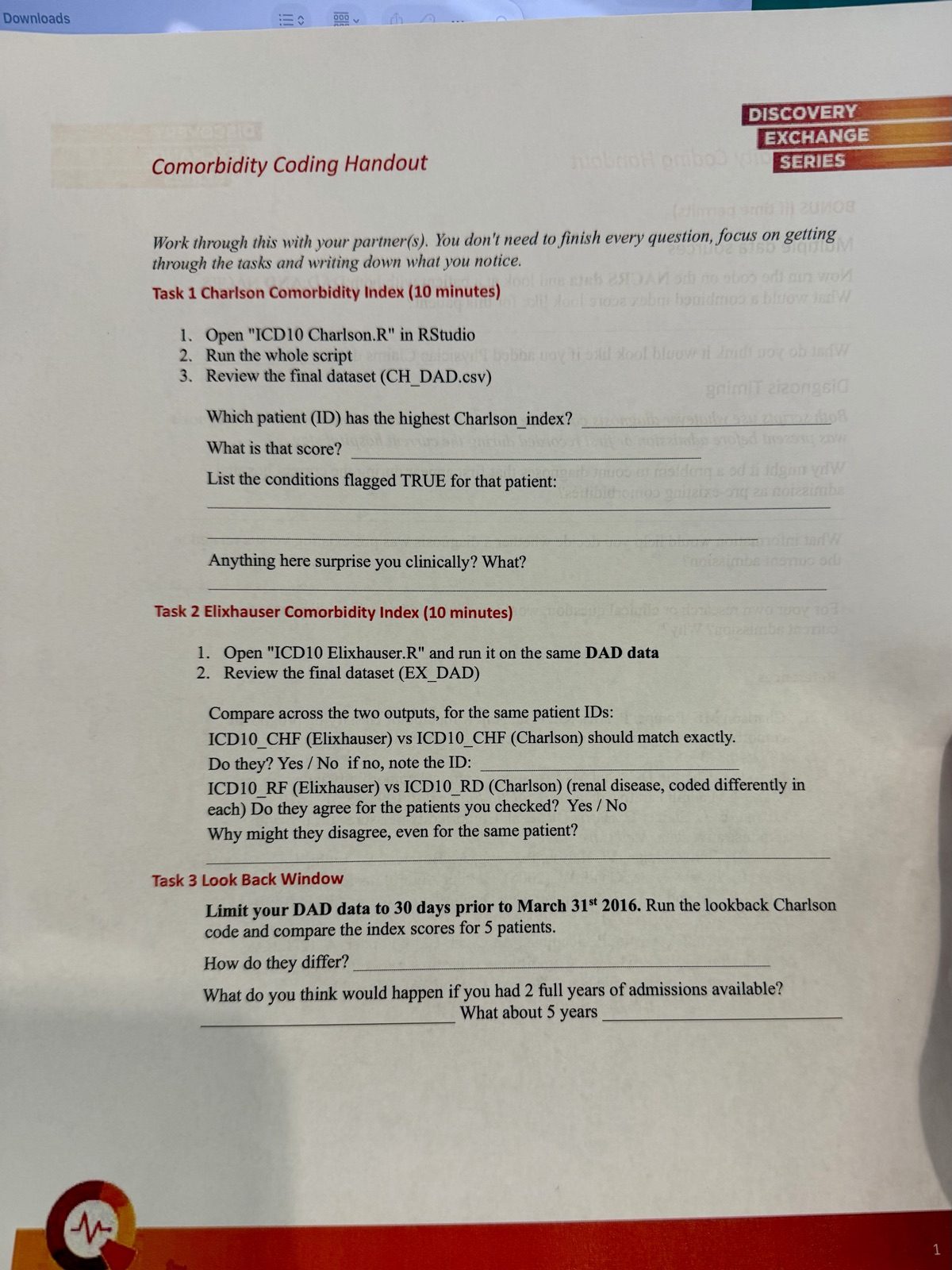
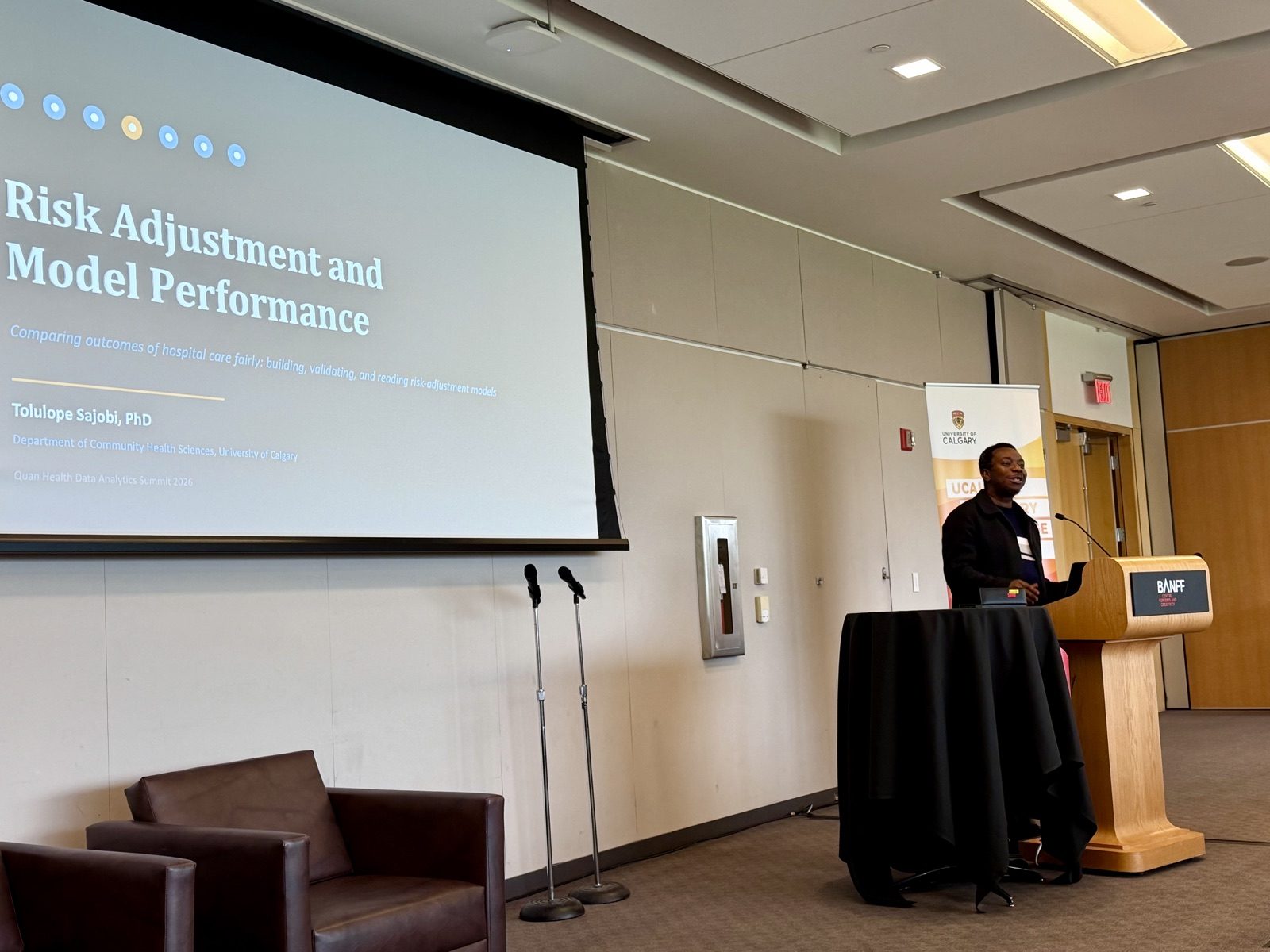
Tuesday turned to methods. Dr. Paul Ronksley and Southern ran a hands-on comorbidity measurement workshop in which participants worked in pairs to compute Charlson and Elixhauser comorbidity indices in R from hospital discharge abstract data and to see how the length of the look back window changes a patient’s score. Dr. Laurent Boyer of Aix-Marseille University gave the international scholar keynote on real-world evidence and learning health systems, and Dr. Tolu Sajobi and James King covered risk adjustment and model performance, or how to build, validate, and read the models that let hospitals compare outcomes fairly. Dr. Fiona Clement followed with a session on costing and economic analysis.
Wednesday fell on the National Day for Truth and Reconciliation, and the organizers left the morning open for participants to listen, learn, and reflect. In the afternoon Dr. Braden Manns spoke on carrying administrative data research from manuscript to policy, and a fireside chat on enhancing administrative data brought together Williamson, Dr. Stephanie Garies, Dr. Frank Lee, Dr. Elliot Martin, and King, with Lee and Martin describing how large language models and free text from clinical notes can add detail that billing and discharge codes leave out. The program wrapped up on Thursday with participant research discussions and the Hude Quan Lecture by Ghali.
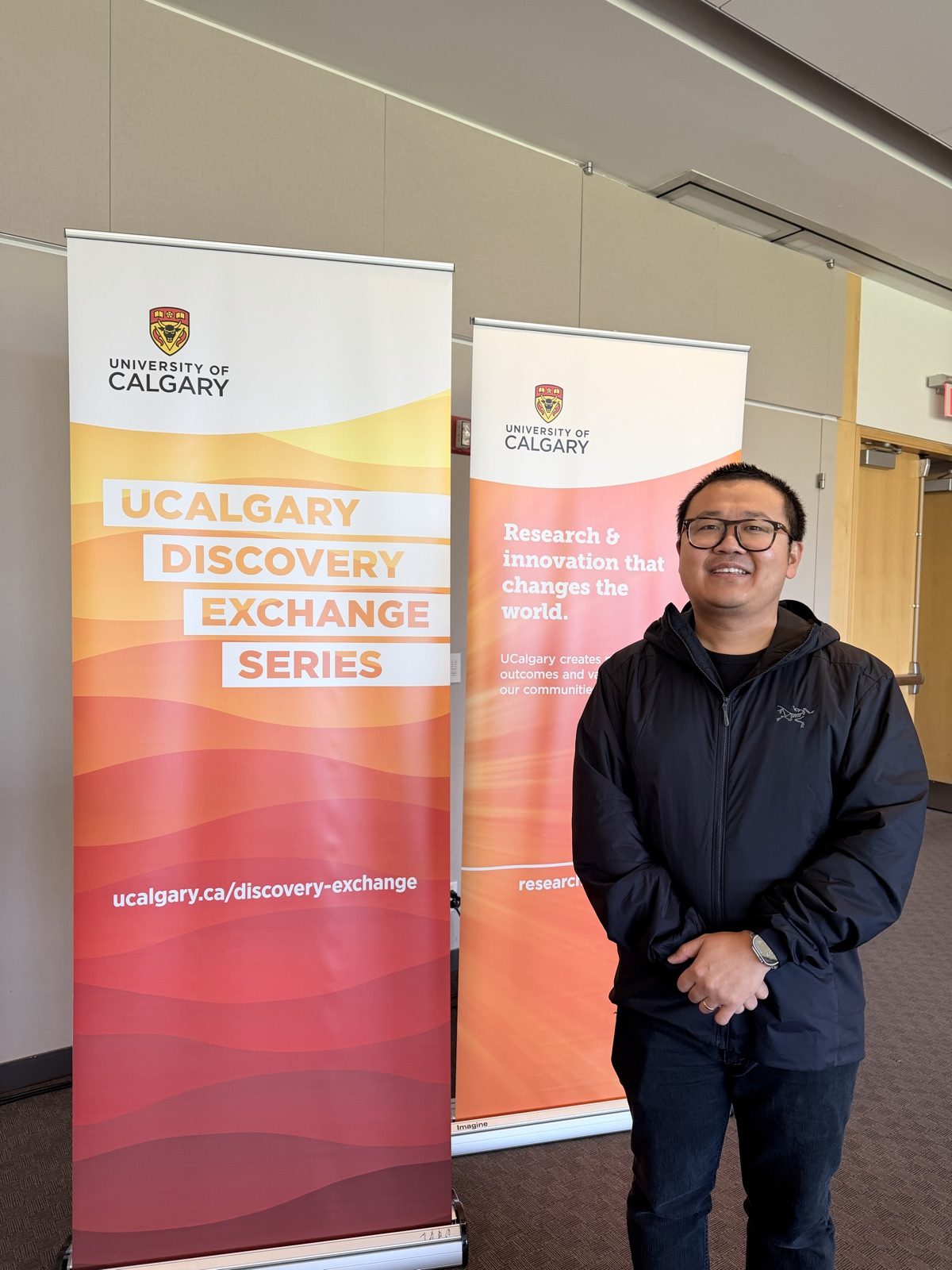
For DENOS Lab the summit was a close look at the data that its health work depends on. The lab studies distributed learning, agentic simulation and reasoning, and much of that work now runs on clinical data. Wu helps build EDSim, an agentic simulator of emergency department operations developed with the Calgary Emergency Medicine Data Lab that Holodinsky directs, a partnership the two labs showed off together earlier this month. Drew leads STARFISH, which lets patients govern how their health data is shared and paid for, and the lab’s federated learning research asks how hospitals and provinces can learn from records that are not allowed to leave home. That question was on the program in Banff as well. Presenter Megan Harmon of the Cumming School of Medicine studied a federated likelihood approach for her master’s thesis that lets jurisdictions analyze health data together without moving sensitive patient records across borders.
Hude Quan liked to say that every student project should be publishable, and the summit was built in that spirit, with workshops that ended in working code and a study design clinic that sent participants home with sharper research questions. DENOS Lab returns to Calgary with new contacts across CHI and a better sense of how the coding, validation, and governance of health data shape what any learning system can safely do with it.